What a pet health record is, and why anyone bothers
Verified 8 October 2026 · general information, not legal or veterinary advice
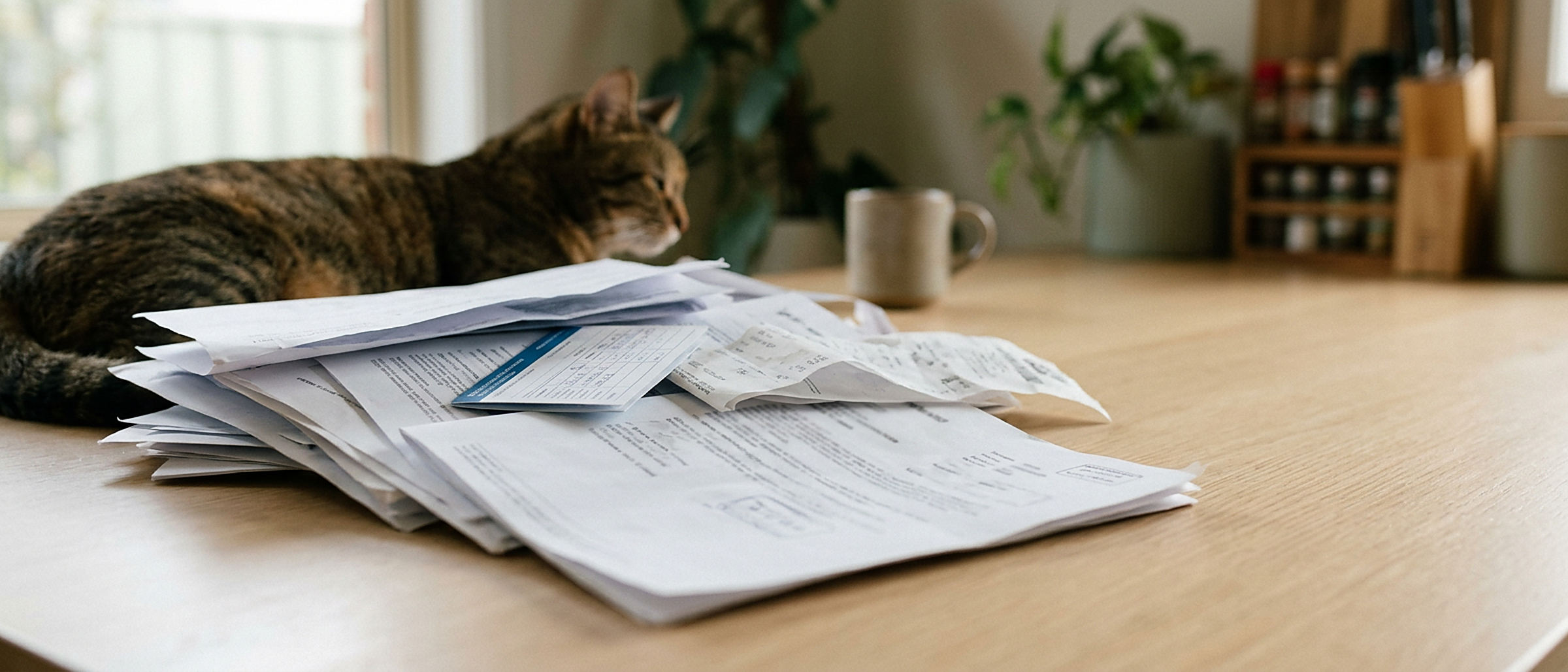
Most people don’t keep one. If your animal is young and well, you probably never notice — the vet has their file, the vaccination card is in a drawer somewhere, and nothing has gone wrong yet.
A pet health record is just the written version of what you already know about your animal, kept somewhere you can find it. It is not a medical document and you are not diagnosing anything.
What actually goes in one
Less than people expect. A useful record is a handful of things, kept roughly up to date:
- Vaccinations — what, and when. The thing a boarding kennel, groomer or new vet asks for first.
- Parasite prevention — flea, tick, worm and heartworm, with dates. Easy to lose track of, and the gaps are what matter.
- Weight, now and then. A number nobody thinks to write down and every vet wants a history of.
- Medications, including the dose and how long for.
- Vet visits — the date, the reason, what was decided.
- Test results, or at least the fact that a test happened and when.
- Anything you noticed — the limp, the extra drinking, the night they wouldn’t eat. Dated.
- The microchip number, and which registry holds it (why that matters).
That last category is the one people undervalue and vets value most. A date beside “drinking more” turns a vague impression into a timeline, and a timeline is something a vet can work with.
The four moments it matters
Nobody keeps a record because it is satisfying. It earns its place on about four occasions:
- At an after-hours or emergency clinic, where nobody has met your animal and the file is at a practice that is closed.
- When you change vets or move — the new clinic starts from nothing unless somebody fills the gap, and the old clinic’s record is not automatically yours to take.
- Boarding, grooming, travel or a new landlord, all of which want vaccination dates at short notice.
- A slow problem over years — the weight that drifts down, the stiffness that creeps in. No single visit shows it. A record does.
The ways people actually do it
There is no correct answer here, and the best method is whichever one you will still be using in a year.
Nothing at all
By far the most common. For a healthy young animal with one steady vet, keeping nothing usually works out fine. The clinic has the file and you can ring them. It stops working when the animal gets older, when you move, or at 10pm on a Sunday.
Paper — a folder, a notebook, the back of the vaccination card
Genuinely good, and underrated. It costs nothing, needs no account and no subscription, never runs out of battery, cannot be locked behind a forgotten password, and will not stop working because a company failed. You can hand it across a consult table and a vet can read it in five seconds. For a lot of people this is the right answer and they should not be talked out of it.
What goes wrong: there is one copy. House fires, floods and moves take it. It is not in your pocket when the kennel rings, you cannot search it, and nothing reminds you that the worming is overdue. Handwriting from three years ago is also less legible than you expect.
If you use paper, do one thing: photograph the pages occasionally. It takes ten seconds and removes the single biggest weakness — that there is only one of it.
Photos on your phone
What most people are already doing without calling it a system. Zero effort, and it captures a document exactly as written, which beats re-typing it.
What goes wrong: they sink into a camera roll of forty thousand pictures and you cannot find the vaccination certificate while standing at the kennel counter. Nothing is dated by content, nothing is searchable, and it all goes with the phone unless it is backed up. A dedicated album with a clear name fixes most of this and takes a minute.
A folder of emails
Automatic, which is its great virtue — invoices and reminders arrive and you do nothing. Email search is better than a camera roll, and the dates are real.
What goes wrong: it only contains what the clinic happened to email. Nothing you observed is in there, and nothing from a clinic that posts or hands things over. It also mixes with everything else in your inbox, so “find the 2023 blood test” becomes archaeology.
A spreadsheet
The strongest of the free options, and the right choice for anyone who already thinks in spreadsheets. It is free, it is yours, it is searchable and sortable, it will still open in twenty years, and in Google Sheets or iCloud it is backed up and reachable from any device. You can share it with a partner. You can make it do exactly what you want, including tracking something nobody else thought of.
What goes wrong: you have to design it, and the design is the hard part — most abandoned pet spreadsheets were abandoned in week three because the columns were wrong. Entering anything on a phone is unpleasant, which matters because the phone is where you are when something happens. Photos and documents do not really fit. And nothing tells you the booster is due.
If you use a spreadsheet, keep it boring: one row per event, with Date, Type, Detail, and Notes. Resist extra columns. The ones that survive are the simple ones.
An app
Built for the job, so the structure is already there, it is on the phone you have with you, it can remind you before something is due, and it can hold photographs and notes in the same place as the dates.
What goes wrong — and this is the part most app pages skip:
- It usually costs money, where paper and a spreadsheet do not.
- Your record sits with a company, and companies close. This is not hypothetical: the pet microchip registry HomeSafeID shut down in 2025 and its website no longer responds, leaving owners outside Victoria with chips pointing at nothing (the full story). The same thing can happen to any app, including this one.
- You can be locked in — if there is no way to get your data out, you are renting your own history.
What to compare them on
| Method | Honest summary |
|---|---|
| Nothing | Free, zero effort, and fine until the animal ages, you move, or it is after hours. Most people, most of the time. No cost, no cover |
| Paper | Free, permanent, readable by anyone, immune to companies failing. One copy, not searchable, not in your pocket, no reminders. Durable, fragile |
| Phone photos | No effort and exact. Unfindable when you need them unless you make an album and back the phone up. Easy, unsearchable |
| Emails | Automatic and dated, but only holds what the clinic sent, and nothing you noticed yourself. Partial by nature |
| Spreadsheet | Free, yours, searchable, shareable, outlives any company. You have to design it, it is painful on a phone, and it never reminds you. Best free option |
| An app | Structured, on your phone, reminds you, holds photos and dates together. Usually costs money, and your record depends on a company continuing to exist. Most complete, least independent |

Three questions worth asking, whichever you choose
- Does it survive your phone dying? If the only copy is on one device, it is one accident from gone. Paper in a drawer passes this. Photos that are not backed up do not.
- Can you get it out? Whatever you use should let you leave with your history in a form something else can read. For a spreadsheet that is free. For an app, check before you commit — an export button is the difference between a record and a hostage.
- Can you answer a question with it at 10pm? Not “is the information in there”, but “can you find it while standing in a car park holding a cat”. That is the test a system either passes or quietly fails.
So which one
If you are starting from nothing, start with the easiest thing you will actually do. A named album on your phone and a photograph of the vaccination card puts you ahead of most owners by the end of the afternoon.
If you like spreadsheets, use a spreadsheet. It is free, it is yours, and nothing on this page beats it for independence.
Use an app if you want the reminders and the structure without building them — and pick one that lets you take your record away.
Keeping your own copy
That is what Mabel.Pet is for. One timeline per animal — vaccinations, medications, weights, vet visits, symptoms, costs — on your phone and in any browser, and exportable in full whenever you want it, including if you stop paying us.
General information, not veterinary advice. Nothing here is a substitute for asking your vet about your own animal. Where this page describes what you can ask a practice for, the rules differ between states and change over time — the guides linked below set out the detail, and were current on 8 October 2026.
Questions people ask
Do I need one if my pet is young and healthy?
Not urgently. With one steady vet and a well animal, keeping nothing usually works out fine — the clinic has the file. It is worth starting before you need it, because the moments it matters (an after-hours clinic, a move, a slow problem over years) are exactly the moments you cannot go back and reconstruct it.
Isn’t my vet already keeping records?
They are, but the clinical record is the practice’s document about your animal rather than your document, and in most of Australia you are not entitled to a copy on demand. It also only covers what happened in that clinic — not what you noticed at home, and not the years before you started going there.
What is the minimum worth doing?
Photograph the vaccination certificate and put it in a named album on your phone. That takes a minute and covers the thing you will be asked for most often. Add the microchip number and the current weight and you are ahead of most owners.
Is a spreadsheet really as good as an app?
For independence, it is better — it is free, it is yours, it will open in twenty years and no company can take it away. What it will not do is remind you that the booster is due, hold photographs tidily, or be pleasant to fill in on a phone. Which of those you care about is the whole decision.
What if I use an app and the company shuts down?
That is a real risk and worth taking seriously — a pet microchip registry closed in 2025 and left owners with chips pointing at nothing. The protection is export: before you commit to any app, check you can get your full record out in a form something else can read, and do it once so you know it works. An app without a working export is renting your own history.
How far back should I go?
Not far. Start from today and add older things when they surface — the vaccination card in the drawer, an invoice in your email. A record that starts now and is kept up is more useful than a perfect reconstruction you abandon halfway.
Should I keep one record per pet, or one for the household?
One per animal. Shared records are where mix-ups happen, and the questions you get asked — when was she wormed, what does he weigh — are always about one animal.
Sources
- Mabel.Pet — Who owns your pet’s medical records in Australia?, for the state-by-state position on getting a copy from your vet
- Mabel.Pet — Moving to a new vet, for the vet-to-vet transfer route
- Mabel.Pet — Your pet’s microchip registry, for the HomeSafeID closure
- Veterinary Practitioners Registration Board of Victoria — Guideline 07, Veterinary medical records
- Australian Veterinary Association — Visiting your vet (vetvoice.com.au)
All accessed 8 October 2026.