Who owns your pet's medical records in Australia?
Verified 7 October 2026 · general information, not legal or veterinary advice

Most of us assume that if we ask the vet for our pet’s records, we’ll get them. It’s our animal, and we paid the bill.
In Australia, that isn’t quite how it works, and it surprises nearly everyone who finds out. The short version: the clinical record is the practice’s document about your animal, not your document. Most clinics will give you a copy anyway. But if one declines, you have fewer rights than you probably expect.
What the rules actually say
The Australian Veterinary Association’s own consumer site puts it plainly:
“Medical records and diagnostic images remain the property of the veterinarian or practice, not the client, and must be retained for legal reasons.”
Australian Veterinary Association — vetvoice.com.auThat is the national association’s position. The rules that actually bind your vet, though, are set by the board in your state — and they do not agree with each other. Victoria is the one most often quoted. Its Guideline 07 states:
“A veterinary practitioner is not legally required to provide copies of their veterinary medical records for an animal to its owner if there is a reasonable justification not to do so.”
Veterinary Practitioners Registration Board of Victoria, Guideline 07 — updated 9 April 2024Queensland is more direct, and its position has been tested in court:
“A veterinarian has the right to decide whether to provide a copy of patient records to clients.”
Veterinary Surgeons Board of Queensland — Veterinary recordsThat isn’t just a board’s view. In Maguire v Lynch [2007] QCA 290, the Queensland Court of Appeal considered an owner seeking an order that a vet hand over treatment records. The appeal was dismissed: the client had no legal right of access to the patient records. The board cites that case as the basis for its guidance.
It depends which state you are in
Victoria and Queensland are the two most often quoted, and they are the two least favourable to owners. Read only those and you would conclude Australian owners have no claim on their pet’s records. In two jurisdictions the published position is close to the opposite.
Here is every Australian jurisdiction, strongest position for the owner first.
| Where | What the board has published |
|---|---|
| TAS | Where you — or another vet on your behalf — ask for a copy, enough to allow ongoing treatment and case management “must be provided professionally and as quickly as possible”. If the vet decides not to, they “must provide justification” for that to you. Failing to comply with a Standard is misconduct in a professional respect under the Act. Must provide Veterinary Service Standards 2023, 4.20 and 7.8; Veterinary Surgeons Act 1987 (Tas) ss 5B, 41(2)(ab) |
| ACT | “Clients are entitled to copies of relevant records.” Whether there is a charge is up to the practice. A request from you or from the next vet “should be treated professionally and actioned as quickly as possible”. This sits in a legislative instrument, not a guidance note. Entitled Veterinary Surgeons (Standards Statement) Approval 2017 (NI2017-445), 5.3.1–5.3.2 |
| WA | When a patient transfers to another vet, the first vet “should, when asked by a client, make available either a copy of the entire original medical record or a summary sufficient in detail to enable appropriate ongoing care of the case” — and, where relevant, lab results and images with it. Should provide Veterinary Surgeons’ Board of WA, Veterinary Clinical Record keeping Guidelines, July 2021 |
| VIC | Not legally required to give you copies “if there is a reasonable justification not to do so” — so the default is to provide, and a refusal needs a reason. Records should be sent to another vet on a formal request. A refusal alone is not grounds for the Board to investigate. Unless justified VPRBV Guideline 07, updated 9 April 2024 |
| NT | Not legally required, but the Board’s expectation is that copies are provided where the client asks, unless the practitioner has a reasonable justification not to. Unless justified Veterinary Board of the Northern Territory |
| SA | Records are the property of the practice; a copy “should be provided but can be done at a charge”. Refusing you is not grounds for a complaint — but refusing another vet, where that leads to an adverse outcome for the animal, may be professional misconduct. At a charge Veterinary Surgeons Board of South Australia |
| QLD | The vet decides. No legal right of access for the owner, tested and upheld in Maguire v Lynch [2007] QCA 290. A refusal alone is not grounds for a complaint. Vet’s decision Veterinary Surgeons Board of Queensland, Veterinary records |
| NSW | Nothing. The Veterinary Practitioners Board publishes guidelines on record keeping, but none on whether an owner can get a copy — so in the largest state there is no published position either way. The whole regulatory framework is currently under review. Nothing published VPB NSW guidelines index, checked 7 October 2026 |
Records are not kept forever. Tasmania requires five years from the end of treatment; the ACT, WA and SA seven. If you think you may ever want the file, ask before the clock runs out.
This is not vets being difficult
It is easy to read the above and feel got at, so it is worth saying clearly that there are good reasons for it.
Clinical records are legal documents. They have to be kept for set periods. They contain the vet’s professional reasoning, which is their work and their liability, and they sometimes contain notes about third parties. A practice that handed out raw notes on demand would be exposed in ways that wouldn’t help anyone, including you.
And in practice, most clinics will give you what you ask for, often the same day. The rules describe what a vet must do, not what they usually do. Victoria’s wording is worth re-reading on this point: a practitioner may decline where there is a reasonable justification. It is not a blanket permission to refuse.

What you can reliably get
Vet to vet, on your say-so
This is the important one, and most owners don’t know it. Victoria’s guideline says that if an owner formally requests it, a practitioner should provide a copy of the record to another practitioner — whether the owner is seeking a second opinion or moving their animal’s ongoing care elsewhere. The AVA’s policy is the same: records can be released to another veterinarian with the client’s authorisation.
So when you change clinics, the reliable path is not to ask for a copy for yourself. It is to ask your new vet to request the file from your old one, with your permission.
The things that are routinely yours
- Vaccination certificates. Issued to owners as a matter of course. You should have every one.
- Invoices and receipts, which carry more clinical detail than people expect — procedure names, drug names, doses.
- Test results, usually, on request.
- A written summary, if you ask for one. A clinic that won’t hand over raw consult notes will very often write you a history instead.
How to ask
Ask in writing, be specific about what you want and why, and give them a few days. “We’re moving to Perth in November and I’d like Pepper’s history sent to our new clinic” gets a better response than “send me everything”.
Name the animal, the rough date range, and where it should go. If you want a copy for yourself as well as for a new vet, say so and say why — a move overseas, a boarding kennel, an insurance claim.
If you’re told no
Here is the part most articles get wrong, so it is worth being precise.
In most of Australia a refusal, on its own, is not something a board will investigate. Victoria’s guideline says a refusal to provide an owner with their animal’s record is not sufficient grounds on its own for the Board to look into professional conduct. Queensland and South Australia say the same. Lodging a complaint and waiting is likely to cost you time you may not have.
Tasmania and the ACT are the exceptions, and the difference is real. In Tasmania a vet who declines must give you their justification for declining, and failing to meet a Standard is misconduct in a professional respect under the Act — so there, an unexplained refusal is a conduct matter rather than a preference. In the ACT the published standard says clients are entitled to copies. In South Australia there is a narrower version of the same point: refusing you is not grounds, but refusing the next vet, where the animal comes to harm as a result, may be.
What tends to work better:
- Ask again through a vet. The vet-to-vet route above is the one the rules actively encourage.
- Ask for a summary instead of the file. Different request, much more often granted.
- Ask why. Where a reason is given, it is often something solvable — an outstanding account, a request that was too broad, or simply nobody having got to it.
A board complaint is the right path for a genuine conduct concern. It is not a lever for getting a document.
The part that is actually in your hands
None of the above changes one thing: the record you keep yourself is the only one you control completely.
Every vaccination date, every treatment, every weight, every time something seemed off — if you write it down as it happens, it is yours. You don’t need permission, it isn’t held anywhere you can’t reach, and it moves with you when you change vets, move states, or stand at a boarding kennel being asked when the last C5 was.
That record also makes the vet-to-vet request easier, because you can tell the new clinic exactly what to ask for and roughly when it happened.
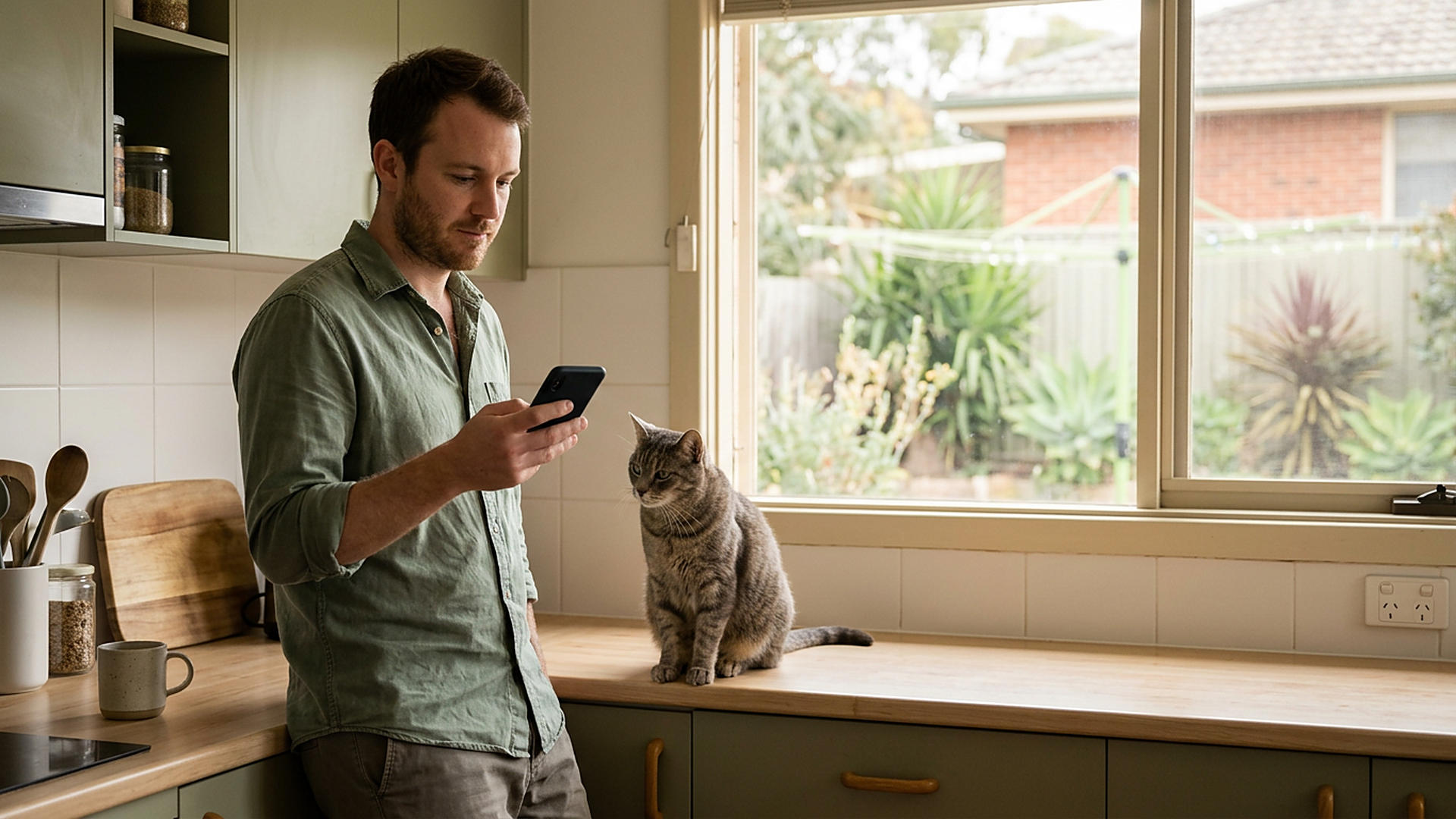
Keeping your own copy
That is what Mabel.Pet is for. One timeline per animal — vaccinations, medications, weights, vet visits, symptoms, costs — on your phone and in any browser, and exportable in full whenever you want it, including if you stop paying us.
General information, not veterinary or legal advice. Rules differ between states and change over time. The sources below were current on 7 October 2026. If you have a dispute with a practice, consider getting your own advice.
Questions people ask
Can my vet refuse to give me my pet’s records?
In most of Australia, yes — but it depends where you are. The clinical record is the practice’s property everywhere. Queensland leaves the decision to the vet, and Victoria permits a refusal where there is reasonable justification. Tasmania and the ACT are different: the ACT standard says clients are entitled to copies, and in Tasmania enough of the record to continue treatment must be provided, with a justification owed to you if it is not. In practice most clinics will give you a copy wherever you live.
Can I get records from a vet I’ve stopped using?
Usually, and the most reliable route is vet to vet. Ask your new clinic to request the file with your authorisation. Both the Victorian guideline and AVA policy support that path specifically.
Is it different if I’m getting a second opinion?
It helps. Victoria’s guideline names a second opinion as one of the situations where a practitioner should send the record on to another vet at the owner’s formal request.
How long do vets keep records?
Seven years after the animal was last treated in the ACT, Western Australia and South Australia; five years in Tasmania. Other states set their own periods. If you think you may ever want the file, ask well before the clock runs out — once a record is destroyed, no rule anywhere brings it back.
What about a pet who has died?
The same rules apply. Ask the practice directly, and ask early if you think you may want the file — retention periods eventually run out.
Does the Privacy Act help?
Not in the way people hope. The Privacy Act is built around personal information about people. A record about an animal is not your personal information simply because you own the animal, which is why this sits with the veterinary boards rather than with the Information Commissioner.
Sources
- Australian Veterinary Association — Visiting your vet (vetvoice.com.au)
- Veterinary Practitioners Registration Board of Victoria — Guideline 07, Veterinary medical records, updated 9 April 2024
- Veterinary Surgeons Board of Queensland — Veterinary records
- Maguire v Lynch [2007] QCA 290, Supreme Court of Queensland, Court of Appeal
- Veterinary Surgeons’ Board of Western Australia — Veterinary Clinical Record keeping Guidelines, endorsed July 2021
- Veterinary Board of Tasmania — Veterinary Service Standards and Guidance Notes, effective 1 July 2023 (Standards 4.20–4.23, 7.4–7.9)
- Veterinary Surgeons Act 1987 (Tas), ss 5B and 41(2)(ab)
- ACT Veterinary Surgeons Board — Veterinary Surgeons (Standards Statement) Approval 2017 (No 1), NI2017-445, Schedule 1 cl 5.3
- Veterinary Surgeons Board of South Australia — guidance on veterinary records
- Veterinary Board of the Northern Territory — guidance on veterinary records
- Veterinary Practitioners Board of New South Wales — Resources and guidelines (index checked for a client-access guideline; none published)
- Australian Veterinary Association — policy on retention of medical records and diagnostic images
All accessed 7 October 2026.